Clinical Honesty
Does a Crown Hair Transplant Work? Why Results Can Take Longer to Show
Why are crown grafts believed not to take? A clinical guide to whorl direction, optical density, donor planning and the longer result timeline.
We approach hair transplant techniques, graft science and aesthetic planning not in marketing language, but through a surgeon's perspective and the literature.
Why are crown grafts believed not to take? A clinical guide to whorl direction, optical density, donor planning and the longer result timeline.
4000+ grafts in one session: time savings vs. donor risk and graft quality trade-off. Candidate selection, optimal count, and critical success factors.
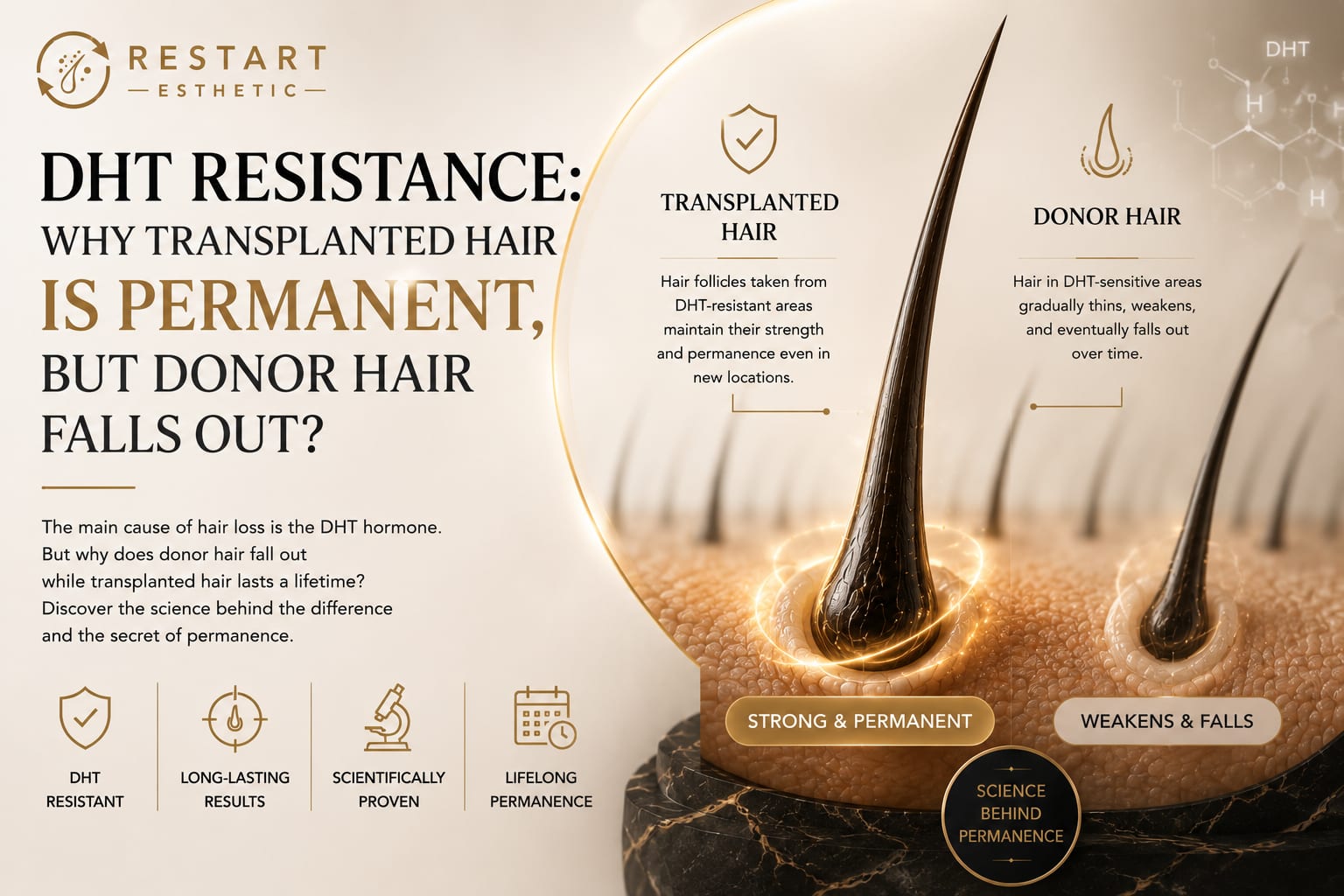
DHT resistance mechanism: Why transplanted hair remains permanent while donor area hair is protected from androgenetic alopecia. Genetic memory and hormonal resistance explained.
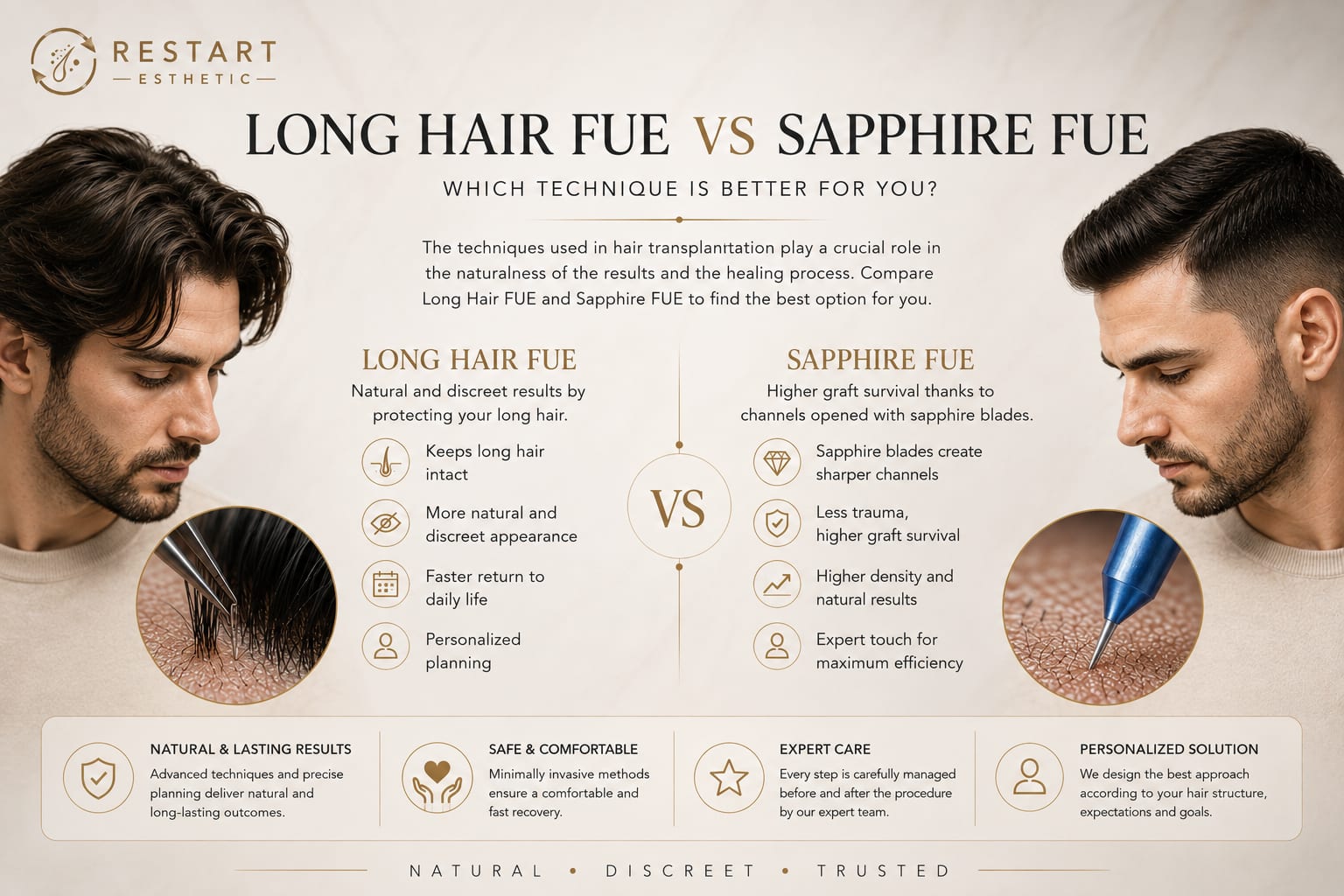
Sapphire FUE focuses on graft quality, while Long Hair FUE prioritizes immediate donor aesthetics. Comprehensive comparison of both techniques—advantages, limitations, and which suits your needs.
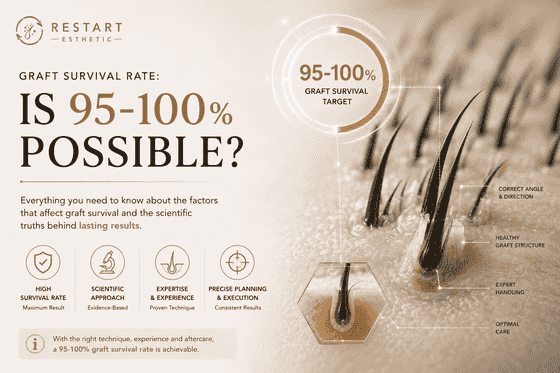
95-100% is marketing language; realistic range is 85-95%. Extraction technique, handling time, donor preparation, surgeon experience — which factors matter? Evidence-based realistic expectations.

Perfect symmetry has never looked natural. Naturalness is personalized asymmetry. From macro and micro asymmetry through camera angles, the design protocol, and how to spot common mistakes in hairline design — the complete framework for natural results.

Donor area management, expectation setting, hairline design, and candidacy — the literature-backed real causes of hair transplant regret and how to prevent it.

The material science of the sapphire blade, why canal angle shapes natural appearance, blade-tip selection by graft caliber, and the mechanism behind faster healing. Shaved, unshaven application and how to choose the best hair transplant.

Six biopsies from behind the ears, combined with platelets, reinforce the FUE operation from within. Mechanism, protocol and the right candidate.

Technique is the tool, not the goal. The real clinical indications, limits and expert decision logic behind unshaven FUE.

Viral carrier status is not a blanket contraindication. The real question is not whether a clinic will do it — it's what their protocol is.

A hair transplant is not only surgery day; it is one connected journey of candidacy, planning, graft protection, early recovery, shock loss and month-12 maturation.

In women, hair loss is usually diffuse and the donor area can be affected too. That makes a transplant fundamentally different from men: diagnosis first, then candidacy. An honest look at who actually benefits.

Recovery after a hair transplant is not a care checklist but a year-long narrative made of phases, each with its own rule. From the anchoring phase of the first 72 hours through the shock loss dip, returning to daily life, and the final result at month 12.

What is follicle transfer, how is it done and what really determines the result? From the follicular unit to graft survival, its relationship with FUE and DHI, and donor management — the procedure at the heart of a hair transplant.

What does AI do in hair transplantation — and what does it not? How Restart Esthetic's Claude- and OpenAI-powered AI Hair Lab improves the accuracy of the expert's decision, and why the expensive-machine illusion is unnecessary.

Price differences are not only about campaigns or numbers. They often reflect different levels of planning, surgical discipline, material quality and aesthetic vision.

Shock loss isn't one event: the shedding of transplanted grafts, the temporary thinning of your own surrounding hair and donor shock loss are all confused. Grounded in telogen effluvium — temporary or permanent?

The micro-trauma at harvest, the out-of-body time and dehydration directly determine post-implantation survival and the life of the tissue. A surgeon's perspective, grounded in the literature.

"Which is better?" is the wrong question. We examine which aesthetic goal each technique serves — through hairline architecture, density and donor management.